Superconducting qubits
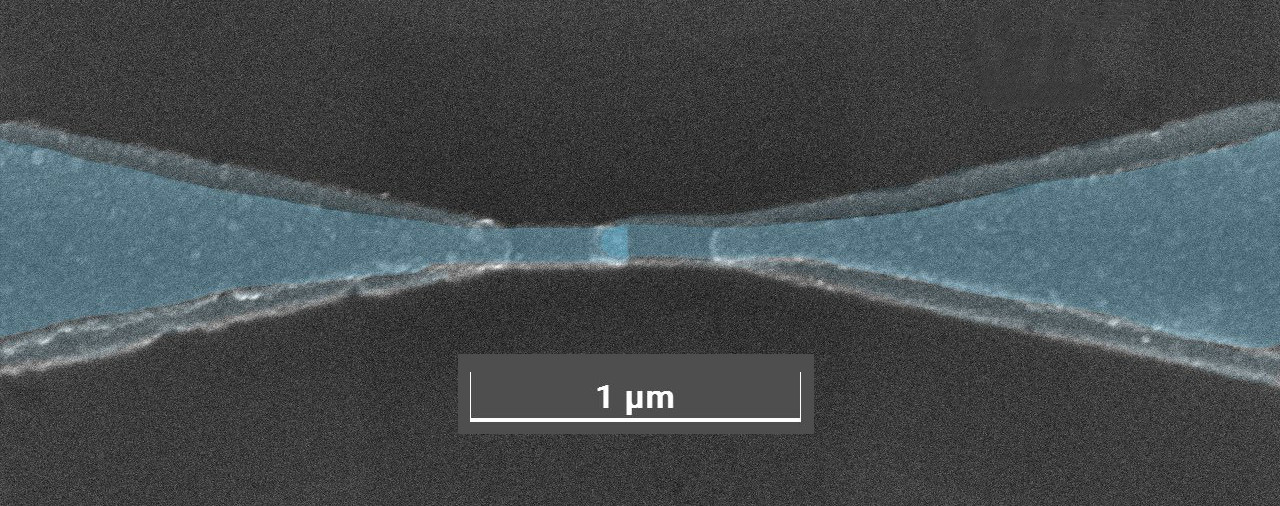
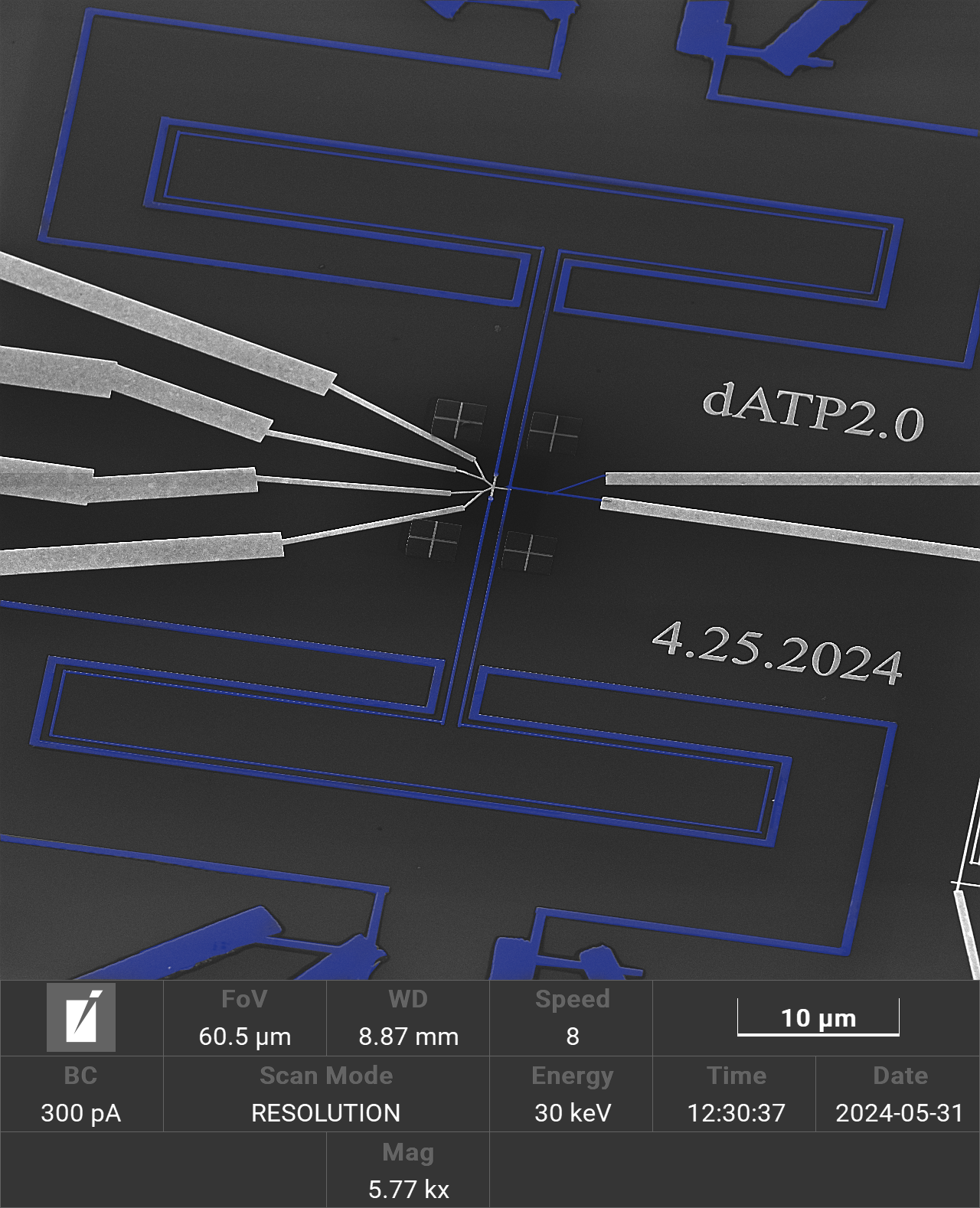
As part of the Superconducting Quantum Materials and Systems (SQMS) Center, one of the 5 Department of Energy National Quantum Initiative (NQI) Centers, we study the properties of the superconducting materials and devices used in superconducting qubits. The goal of this research is to determine the factors that limit coherence times in superconducting qubits. Earlier work focused on the properties of the Nb films used in qubit devices. Current research is focused on quantifying quasiparticle dynamics in superconductors and noise in Josephson junctions.
Read more
Superconducting proximity effect
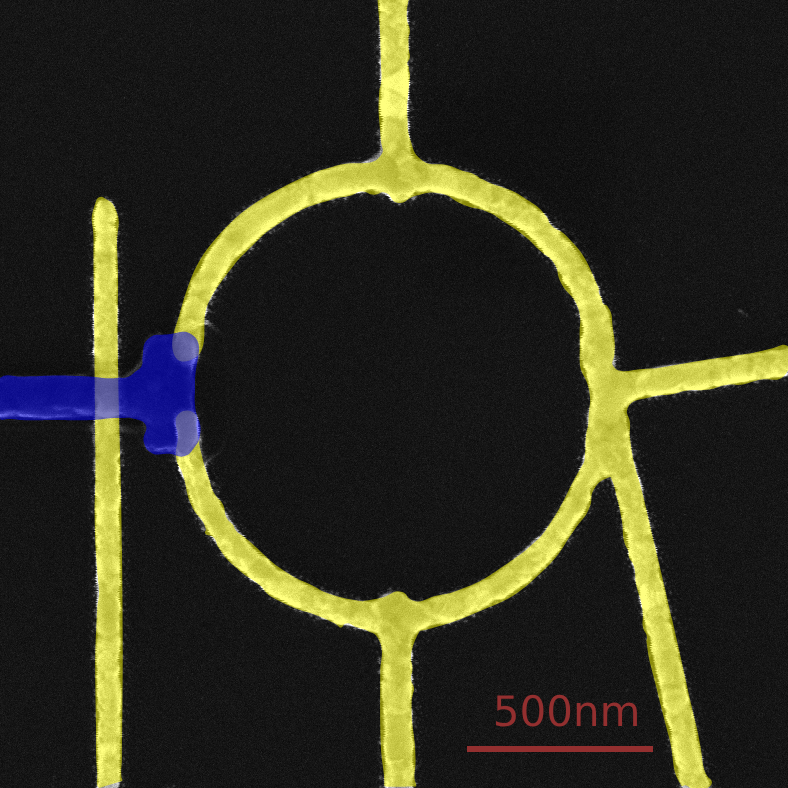
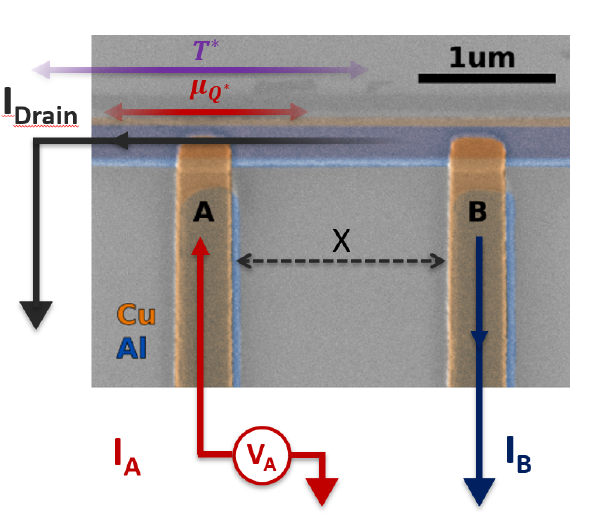
Current research on superconductivity concentrates on coherent nonlocal effects between two normal metals mediated by a superconductor, noise measurements in normal-metal/superconductor heterostructures, the interaction between ferromagnetism and superconductivity on the mesoscopic scale, and superconductivity and the proximity effect in transition metal-dichalcogenides.
Read more
Epitaxial complex oxides
We are studying the properties of the 2DEG formed at surfaces and interfaces of KTaO3 (KTO), a large band gap insulator with strong spin-orbit interactions. The KTO 2DEG is found to show many interesting phenomena, including the coexistence of superconductivity and magnetism and a nonlinear Hall effect. Our current focus is on investigating the nature of the superconductivity in KTO 2DEGs as it may be potentially unconventional.
Read more
Low temperature scanning probe microscopy
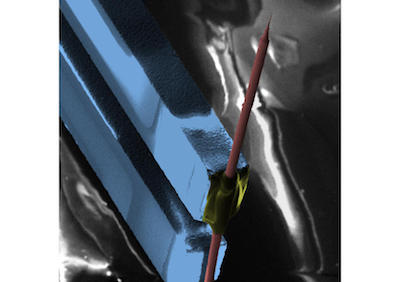
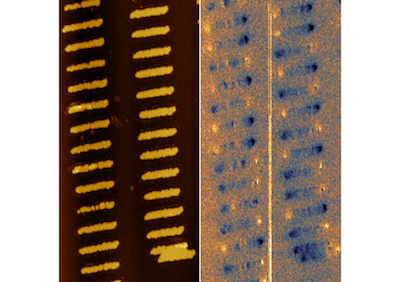
Development of a low temperature, millikelvin range, scanning probe microscope capable of doing atomic force microscopy, magnetic force microscopy and electrostatic force microscopy at temperatures down to 50 mK. The current focus is on developing a microwave impedance microscope (MIM).
Read more