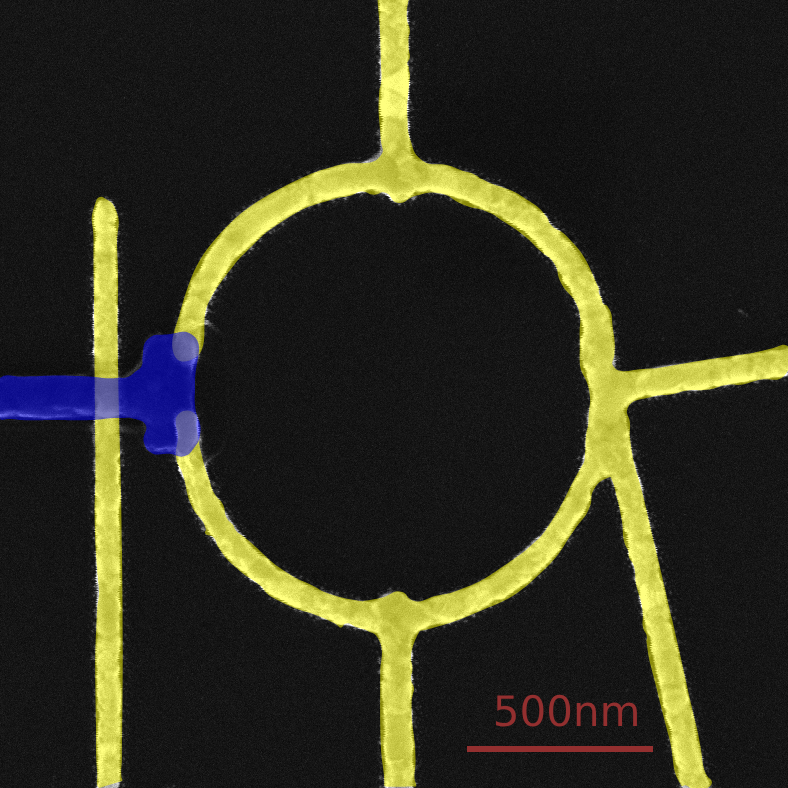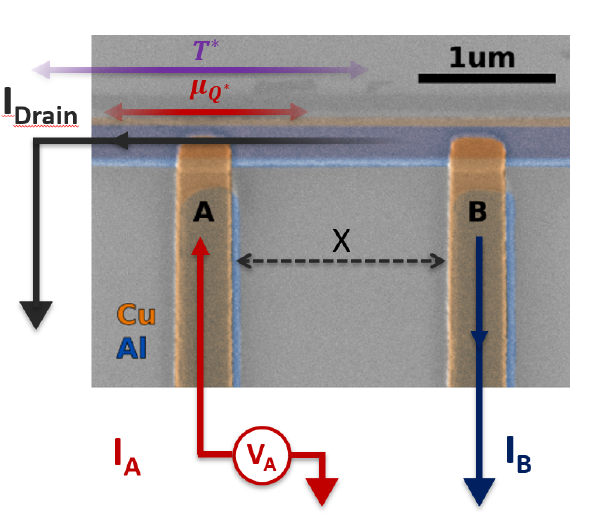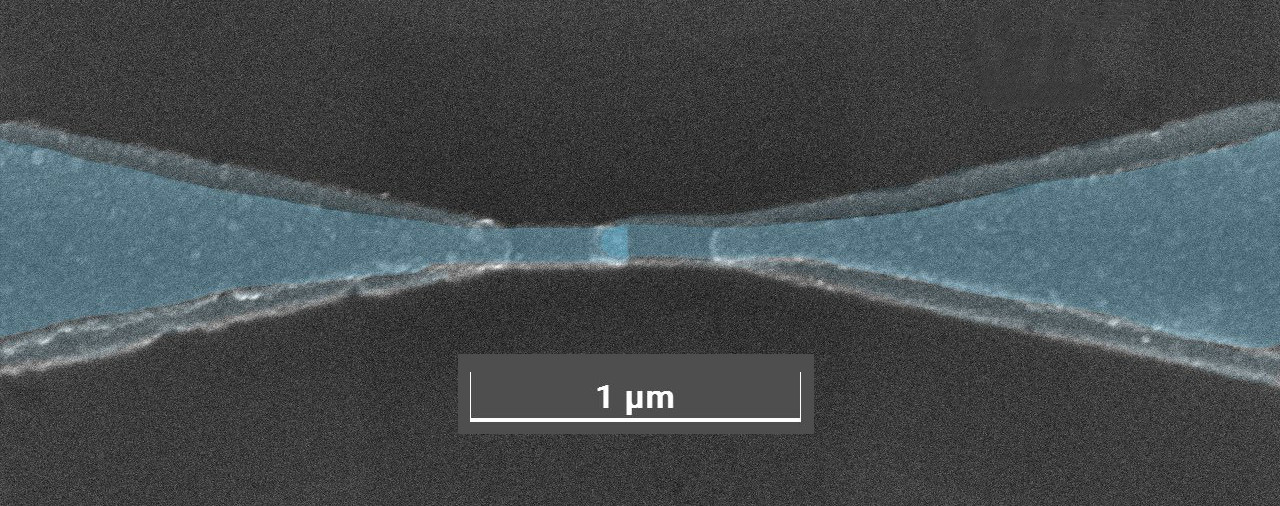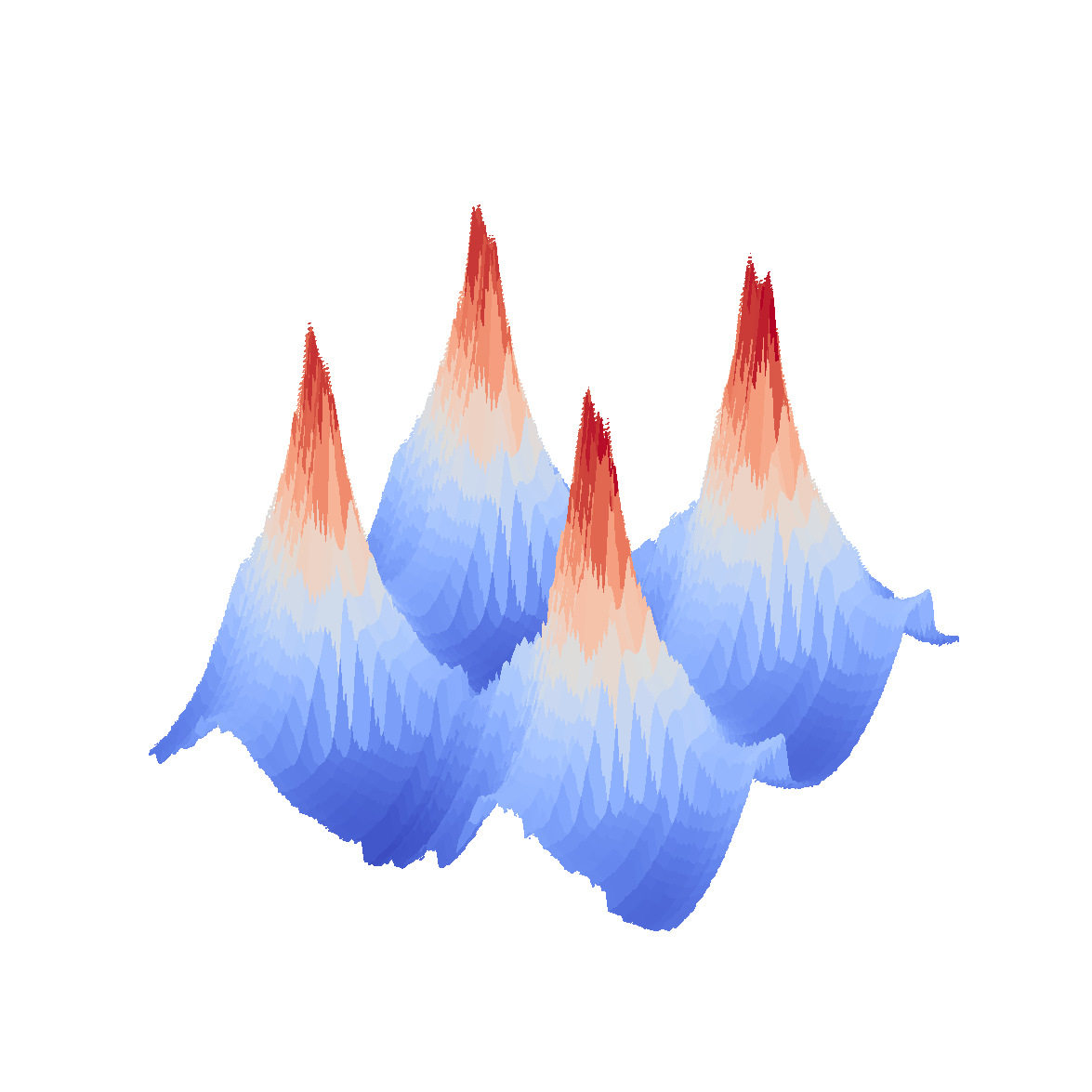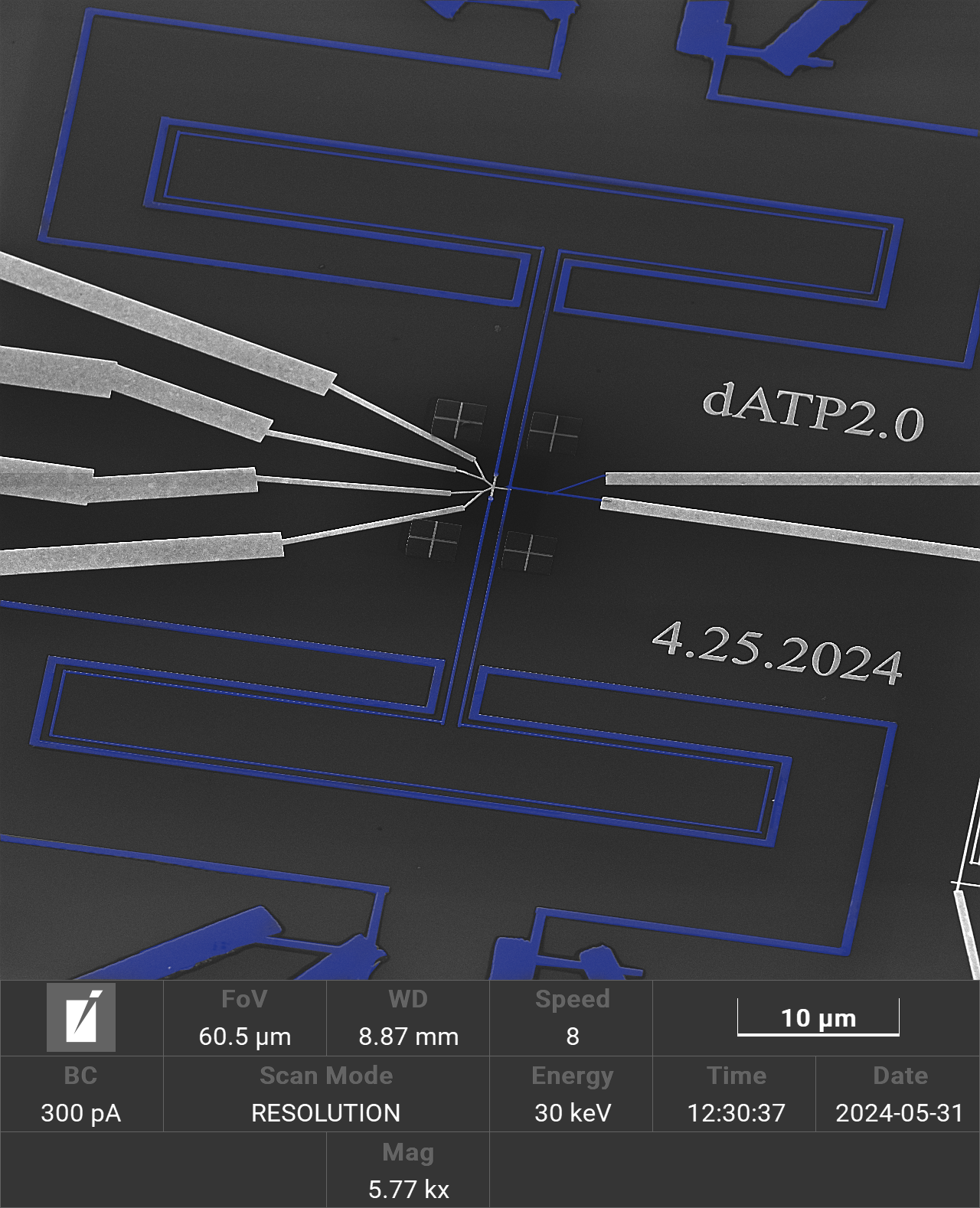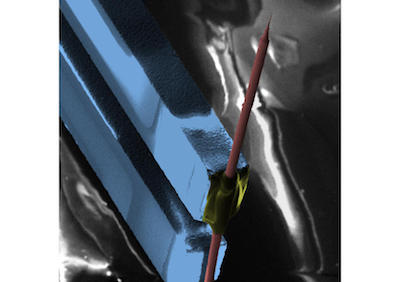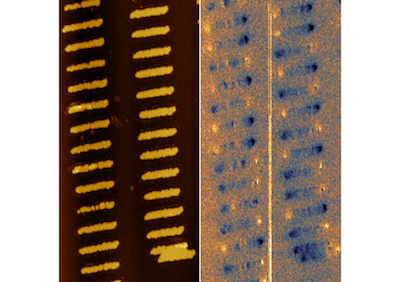
Mesoscopic physics studies objects that lie between the worlds of classical and quantum mechanics, objects usually large enough to be visible in an optical microscope, but small enough to have properties exhibiting the wavelike, nonlocal, and coherent behavior that are signatures of the quantum world. Our lab uses a wide range of fabrication techniques to make novel devices using normal metals, superconductors, ferromagnets, carbon nanotubes, graphene, complex oxides and a variety of two-dimensional materials. With a host of new physical phenomena only realizable at the nanoscale, mesoscopic research lies not only at the intersection of the classical and the quantum, but at the nexus of basic physics research and cutting-edge technology as well.
Two current projects involve devices incorporating superconductors. The first is part of the Department of Energy funded Superconducting Quantum Materials and Systems (SQMS) Center, a National Quantum Initiative Center led by FermiLab whose focus is on increasing the coherence time of superconducting qubits and cavity based qudits. The second project involves studying quantum coherent effects in superconducting proximity effect devices. These are devices in which a superconductor is placed in contact with a non-superconducting material such as a conventional metal, semiconductor or ferromagnet such that superconducting pair correlations leak into the non-superconducting material, leading to novel, long-range coherent effects. Both these projects are described in more detail on the Current Research page.
We have openings for PhD, Master’s and undergraduate students.